


contact info
- 3rd Floor, Gujranwala Business Center, Near KFC, G.T. Road, Gujranwala, Pakistan
- +92 303 0813333
- +92 303 0644484
- info@hashlearning.com
- info@hashlearning.com
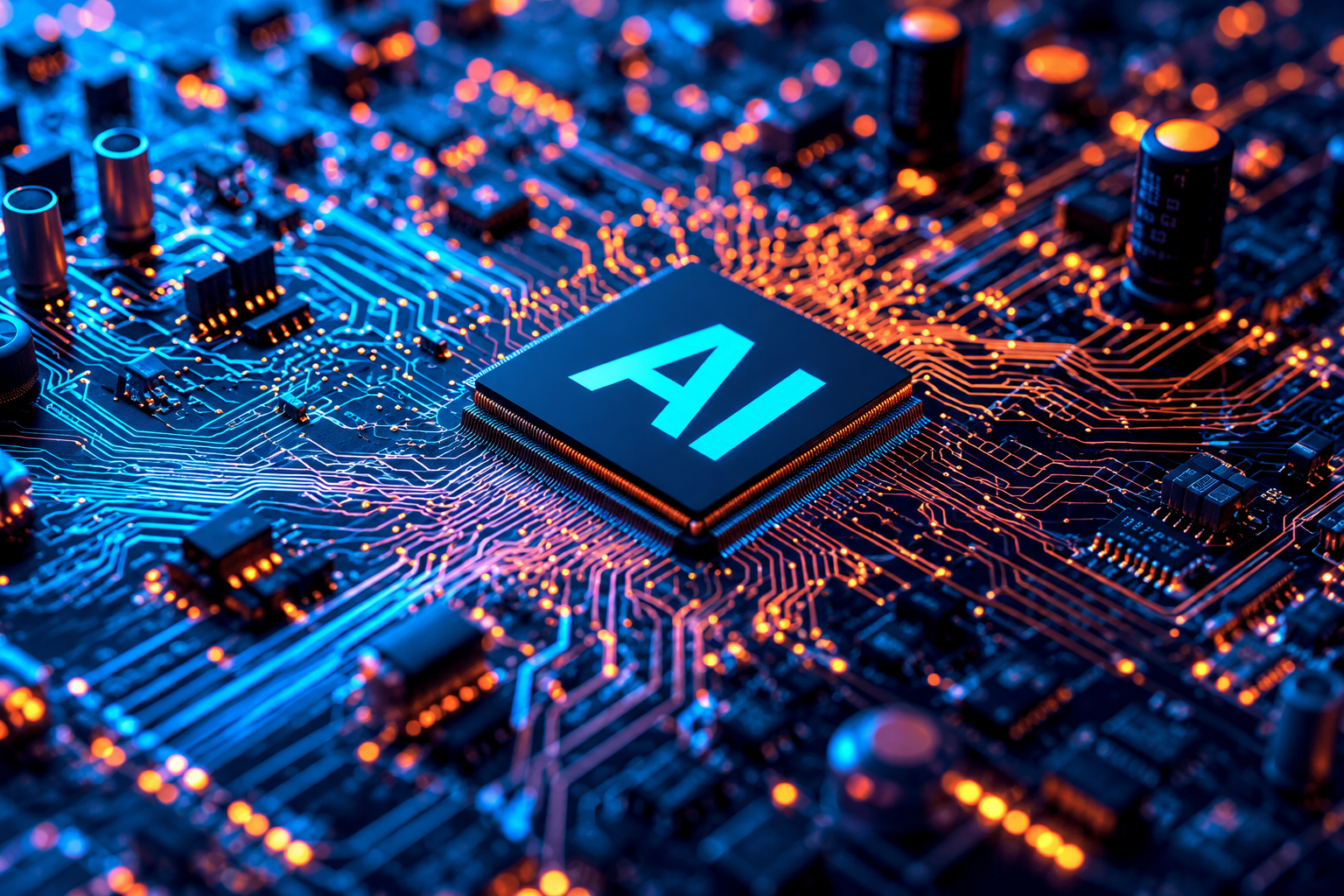
Artificial Intelligence (AI) has become one of the most revolutionary technologies in the modern world. From voice assistants and smart chatbots to self-driving cars and advanced healthcare systems, Artificial Intelligence is transforming the way people work, learn, communicate, and solve problems. Businesses across every industry are adopting AI to improve productivity, automate repetitive tasks, analyze massive datasets, and deliver better customer experiences.
Whether you are a student, business owner, software developer, or technology enthusiast, understanding Artificial Intelligence is essential because AI continues to shape the future of innovation.
Artificial Intelligence (AI) is a branch of computer science that focuses on creating machines and software capable of performing tasks that typically require human intelligence. These tasks include learning, reasoning, decision-making, speech recognition, language understanding, image recognition, and problem-solving.
Unlike traditional software that follows fixed instructions, AI systems can analyze data, recognize patterns, and improve their performance over time through learning algorithms.
Narrow AI is designed to perform specific tasks. It is the most common form of AI used today.
Examples include:
General AI refers to machines capable of understanding and performing any intellectual task that humans can do. This level of AI remains a research goal and has not yet been achieved.
Super AI represents a theoretical future where machines surpass human intelligence in creativity, reasoning, and decision-making. While often discussed in research and science fiction, it does not currently exist.
AI systems rely on several technologies working together:
These technologies enable AI to analyze data, identify patterns, make predictions, and continuously improve its performance.
AI automates repetitive tasks, allowing employees to focus on strategic and creative work.
Businesses use AI-powered analytics to make informed decisions based on real-time data.
AI minimizes human error in areas such as medical diagnosis, financial analysis, and manufacturing.
AI chatbots provide instant responses, improving customer satisfaction and reducing operational costs.
Automation reduces labor costs and increases operational efficiency.
AI delivers personalized recommendations on shopping websites, streaming platforms, and educational systems.
Artificial Intelligence helps doctors diagnose diseases, analyze medical images, predict patient outcomes, and improve treatment planning.

Educational institutions use AI to personalize learning experiences and automate administrative tasks.
Examples include:
Companies leverage AI to improve customer service, marketing, sales forecasting, and business intelligence.
Business applications include:
Banks and financial institutions use AI for:
Manufacturers use Artificial Intelligence for predictive maintenance, robotics, quality inspection, and production optimization.
Artificial Intelligence powers:
Online businesses use AI to improve shopping experiences through:
Discover more educational resources on our website.
Some widely recognized Artificial Intelligence technologies include:
The future of Artificial Intelligence is expected to bring significant advancements across industries. AI will continue to improve automation, healthcare, education, cybersecurity, finance, transportation, and scientific research.
Emerging trends include:
Organizations investing in AI today are likely to gain a competitive advantage through greater efficiency, innovation, and data-driven decision-making.
Despite its benefits, AI also presents several challenges:
Responsible AI development requires transparency, fairness, and human oversight.
Artificial Intelligence is no longer a futuristic concept—it is a core technology shaping modern life. From improving business operations to advancing healthcare and education, AI enables faster, smarter, and more efficient solutions.
As AI technologies continue to evolve, individuals and organizations that understand and adopt Artificial Intelligence will be better positioned to thrive in the digital economy.
Artificial Intelligence is revolutionizing the world by enabling machines to perform intelligent tasks, automate workflows, and support better decision-making. Its applications span healthcare, education, finance, manufacturing, transportation, and e-commerce, making it one of the most impactful technologies of the 21st century.
Whether you are exploring AI for learning, business growth, or innovation, understanding Artificial Intelligence courses the first step toward leveraging its full potential. As technology advances, AI will continue to drive digital transformation and create new opportunities across every industry.

You must be logged in to post a comment.
© Hashlearning 2021. All Rights Reserved, All Wrongs Reserved.
© 2021-26 Hashlearning . All Rights Reserved. Powered By Hashtronics
WhatsApp us